
By Shamshularphin Ansari
Founder, Shippoing
🕒 Reading Time: 7 minutes
A customer books an important shipment. A few hours later, they want to know where it is. They open the tracking page. There is no update. So they call customer support.
Customer support calls the branch. The branch checks with the operations team. Operations contact the delivery executive. Finally, the customer receives an update. By then, several more customers have already called asking the same question. If you run a courier business, this situation is probably familiar. Most of these customers are not complaining. They simply want information. As shipment volume grows, answering the same tracking questions again and again becomes difficult for customer support and operations teams. This is one of the biggest reasons why real-time shipment tracking has become an essential part of modern courier operations.
Customer expectations have changed
A few years ago, customers were comfortable waiting for shipment updates.
Today, things are different.
People expect information instantly.
They want to know:
- Where is my shipment?
- Has it reached the destination hub?
- Is it out for delivery?
- When will it arrive?
- Has it already been delivered?
According to DHL’s 2024 Online Shopper Survey, shipment tracking continues to be one of the most important services customers expect after placing an order. Customers want visibility throughout the delivery journey, not just after delivery.
This expectation is no longer limited to large international courier companies.
Whether customers send one parcel every month or hundreds of shipments every day, they expect the same level of visibility.
Why poor shipment visibility creates customer frustration
Think about your own experience while waiting for an online order. Most of us keep checking the tracking page. Very few people actually want to call customer support. Courier customers are no different. When customers cannot see what is happening with their shipment, they naturally become anxious.
Questions start coming in.
- Has my shipment been dispatched?
- Is there a delay?
- Is someone available at the delivery location?
- Can you check with the driver?
As these enquiries increase, customer support teams become busier and operations teams receive constant interruptions. Poor shipment visibility affects everyone.
The hidden cost of manual shipment updates
Many courier companies never calculate how much time they spend providing shipment updates. Imagine your customer support team receives 150 calls in one day. If even half of those calls are related to shipment status, your team spends several hours every day answering the same questions. Now imagine this every week.
Every month.
Every year.
That is valuable time that could have been spent solving customer issues, improving delivery performance, or supporting business growth.
What is real-time shipment tracking?
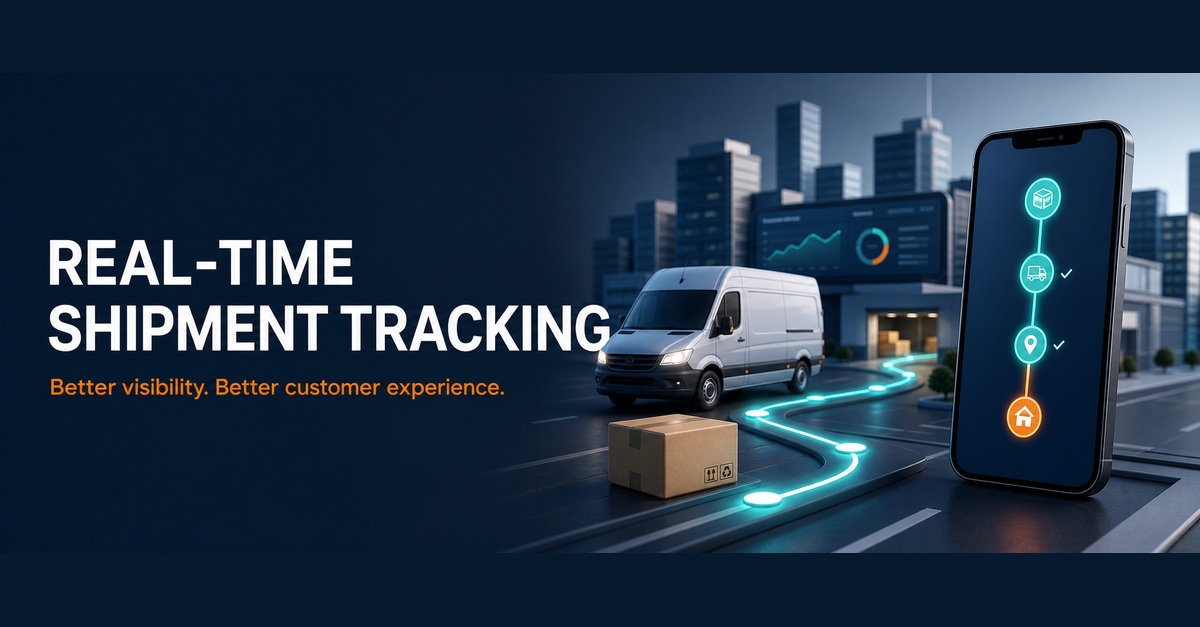
Real-time shipment tracking allows customers and courier companies to see the latest shipment status whenever they need it.
Instead of depending on phone calls or manual updates, customers can simply check the latest information themselves.
A good shipment tracking system should show:
- Shipment booked
- Pickup completed
- Shipment in transit
- Arrival at hub
- Out for delivery
- Delivered
- Proof of Delivery (POD)
The objective is simple. Give customers accurate information whenever they need it.
How customers benefit from real-time tracking
Customers feel more confident
Customers do not like uncertainty. When they know exactly where their shipment is, they feel more confident about the delivery. Visibility creates trust. Trust creates repeat business.
Customers do not need to call repeatedly
One of the biggest advantages of real-time tracking is that customers can find information themselves. Instead of calling customer support, they simply open the tracking page. This saves time for both the customer and the courier company.
Customers receive a better overall experience
Today, customers compare every business with the digital experiences they already use.
- They use banking apps.
- Food delivery apps.
- Cab booking apps.
- Online shopping platforms.
They expect courier companies to provide the same convenience.
Real-time tracking helps meet those expectations.
How courier companies benefit
Real-time shipment tracking is not only useful for customers. It also improves internal operations.
Customer Support Team
Support executives spend less time answering routine tracking enquiries. Instead, they can focus on solving customer problems that genuinely require human support.
Operations Team
Operations teams receive fewer interruptions. Instead of checking shipment status for every customer call, they can focus on managing pickups, deliveries, routing, and exceptions.
Management
Management gains better visibility into daily operations. They can identify delays earlier, monitor delivery performance, and make quicker decisions.
Better tracking improves communication
Communication is one of the biggest reasons customers remember a courier company. Customers understand that delays can happen. What they dislike is not knowing what is happening. Keeping customers informed at every important stage creates a better experience.
For example:
- Shipment booked
- Pickup completed
- Shipment dispatched
- Arrived at destination hub
- Out for delivery
- Delivered successfully
Even a simple notification can reduce customer anxiety.
Common mistakes courier companies make
Many courier companies believe that shipment tracking means only showing the current location.
Actually, good shipment tracking is much more than that.
It should also provide:
- delivery milestones
- expected delivery updates
- POD availability
- shipment history
- delay notifications
- customer communication
Another common mistake is depending only on manual updates. As shipment volume grows, manual tracking becomes difficult to maintain consistently.
What should a good shipment tracking system offer?
When selecting a shipment tracking solution, look for features such as:
- Real-time shipment updates
- Easy tracking page
- Mobile-friendly access
- Automated notifications
- POD availability
- Shipment history
- Delivery milestones
- Customer self-service portal
- Secure access
- Integration with courier operations
The goal is not simply to show tracking information. The goal is to improve customer confidence while reducing manual effort.
Customer expectations will continue to grow
The courier industry is changing quickly. Customers now expect faster communication, greater transparency, and better visibility throughout the delivery journey. According to DHL’s latest customer research, shipment visibility remains one of the most important factors influencing customer satisfaction after an order is placed.
Businesses that improve tracking today will be better prepared for tomorrow.
How solutions like Shippoing help
A good courier management platform should make life easier for both customers and your internal teams.
Shippoing has been designed around the day-to-day challenges faced by courier and express logistics companies.
It combines:
- Real-time shipment tracking
- Customer self-service portal
- POD management
- Shipment notifications
- Customer communication
- Operational visibility
The objective is simple. Reduce manual follow-up. Improve shipment visibility. Give customers a better experience.
Conclusion
Customers no longer judge courier companies only by how quickly they deliver. They also judge them by how easily they can access shipment information. Real-time shipment tracking reduces uncertainty. It reduces customer support calls. It improves communication. And it helps courier companies operate with better visibility.
In today’s courier business, shipment tracking is no longer just a feature. It has become an essential part of delivering a better customer experience.
Frequently Asked Questions
What is real-time shipment tracking?
Real-time shipment tracking allows customers to check the latest shipment status, movement, and delivery progress without contacting customer support.
Why is shipment tracking important?
Shipment tracking gives customers better visibility, improves confidence, reduces uncertainty, and helps courier companies reduce support calls.
Does real-time tracking reduce customer support calls?
Yes. When customers can track shipments themselves, they no longer need to contact customer support for routine updates.
Can small courier companies also benefit?
Absolutely.
Even small courier companies receive repeated tracking enquiries every day. A good tracking system helps improve customer experience while reducing manual work.
Is shipment tracking different from a customer portal?
Yes.
Shipment tracking is one part of a customer portal.
A customer portal also allows customers to access POD, invoices, shipment history, notifications, and service requests.
Looking to improve shipment visibility?
If your courier business is growing and your teams spend too much time answering shipment status enquiries, it may be the right time to introduce real-time shipment tracking.
Book a personalised demonstration of Shippoing and see how it helps courier companies improve shipment visibility, reduce support calls, and deliver a better customer experience.